
Cinematic Media Completes Post for Amazon Prime’s Conquistador Epic “Hernan”
Mexico City facility provides complete sound and picture services for 8-episode series about the conquest of the Aztec Empire.
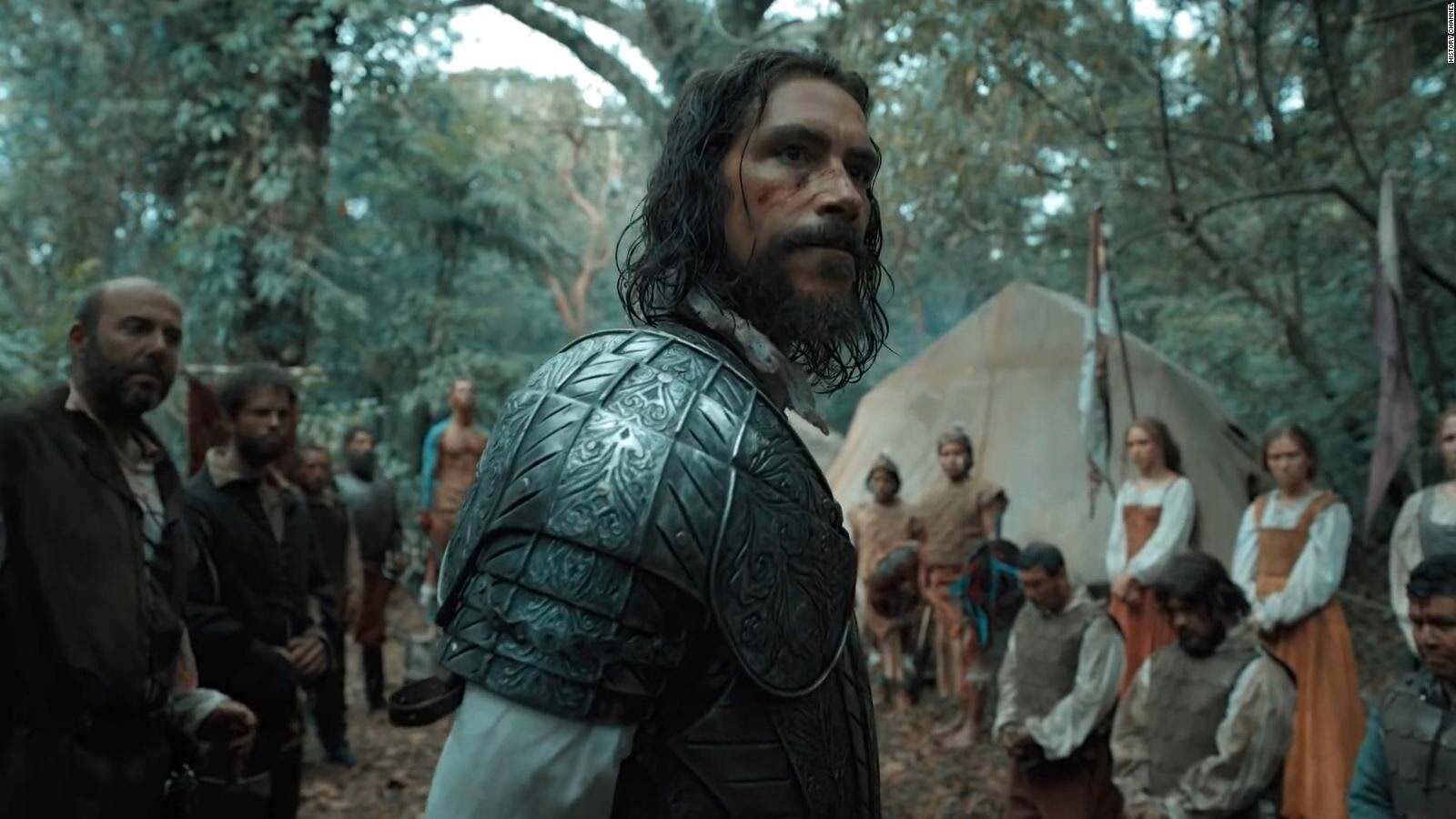
MEXICO CITY—January 20, 2020— Now streaming on Amazon Prime, the new historical drama Hernan centers on Spanish conquistador Hernan Cortes’ brutal conquest of the Aztec Empire beginning in 1519. Co-produced by Mexico’s Dopamine (a Salinas Group company) and Spain’s Onza Entertainment, the series’ lavishly produced, 8-episode first season features an international cast, a riveting story and thrilling action as it relates the momentous events that altered the fates of two nations. Julián de Tavira, María Jaén and Amaya Muruzabal are the creators.
Production of the series was split between Mexico and Spain. Post production was also an international affair. The show’s editorial team and VFX provider (El Ranchito) were based in Spain, while sound and picture finishing were completed at Cinematic Media in Mexico City whose team was led by senior colorist Ana Montaño (Yankee, Dani Who?) and two-time Academy Award-nominated supervising sound editor/re-recording mixer Martin Hernandez (The Revenant, Birdman).
Cinematic Media’s work began before the cameras started rolling. Montaño assisted cinematographer Beto Casillas with camera tests involving the series’ principal actors, sets and costumes. She also travelled to New York City to work with Technicolor PostWorks colorist Anthony Raffaele in developing an exposure LUT for use in production and a show LUT for use in dailies processing. “We addressed several issues during pre-production,” recalls Montaño. “One was contrast. As one of the deliverables was for broadcast, it was important to have just the right amount of contrast to make the show look good on air without compromising our creative approach.”
“We were also concerned about daylight continuity, especially in exteriors, because the production schedule was very tight,” she adds. “They were planning to shoot at different times of the day and therefore matching shots and scenes in color grading was going to be very complicated. We discussed the importance of maintaining control over the quality of natural light with the lighting department. Depending on the situation, they softened or added supporting artificial lights to keep consistency between shots.”
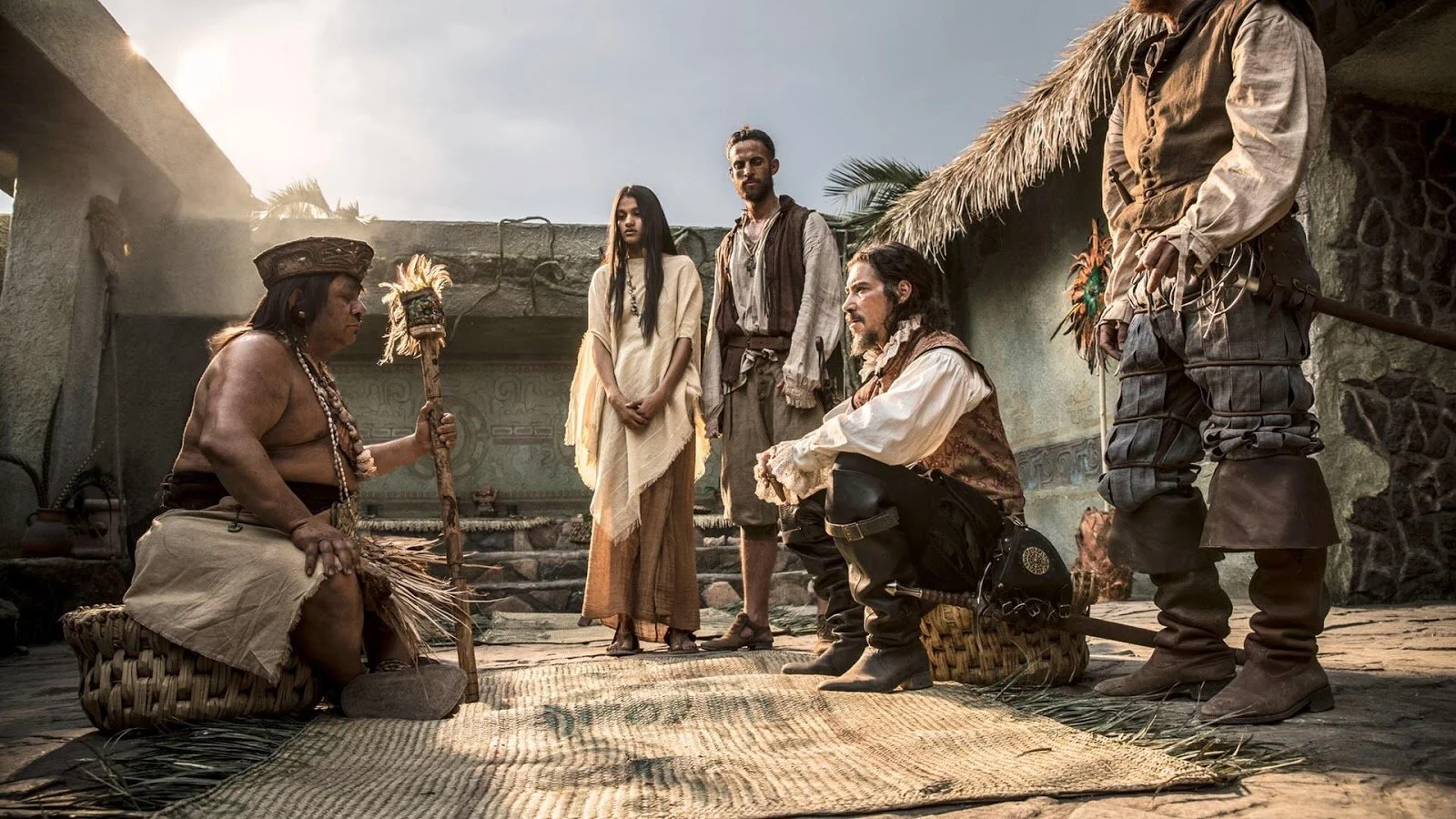
Careful consideration was also given to night scenes, where the main natural light source would be fire. “We talked about how to manage the color temperature on fire-lit scenes,” Montaño notes. “When we applied the LUT to those scenes, they looked quite reddish, while we wanted the look to be more amber. I generated a special modified LUT for those lighting set ups. We also didn’t want to lose too much detail in the shadows. We agreed that the DP was going to slightly overexpose the night shots so that we could bring back detail in Da Vinci Resolve.”
Casillas shot principal photography with RED Monstro 8K cameras. Cinematic Media managed dailies processing with Colorfront On-Set and the show LUT. Final grading was done in the facility’s color theater on Da Vinci Resolve. Casillas and series creator Julián de Tavera attended most sessions in person and monitored others via Cinematic Media’s Sohonet ClearView HD remote collaboration connection. After finishing the grading were complete, the post team rendered a 4K color master and an edit master with credits and graphics. Deliverables for streaming and broadcast were produced via Colorfront Transkoder.
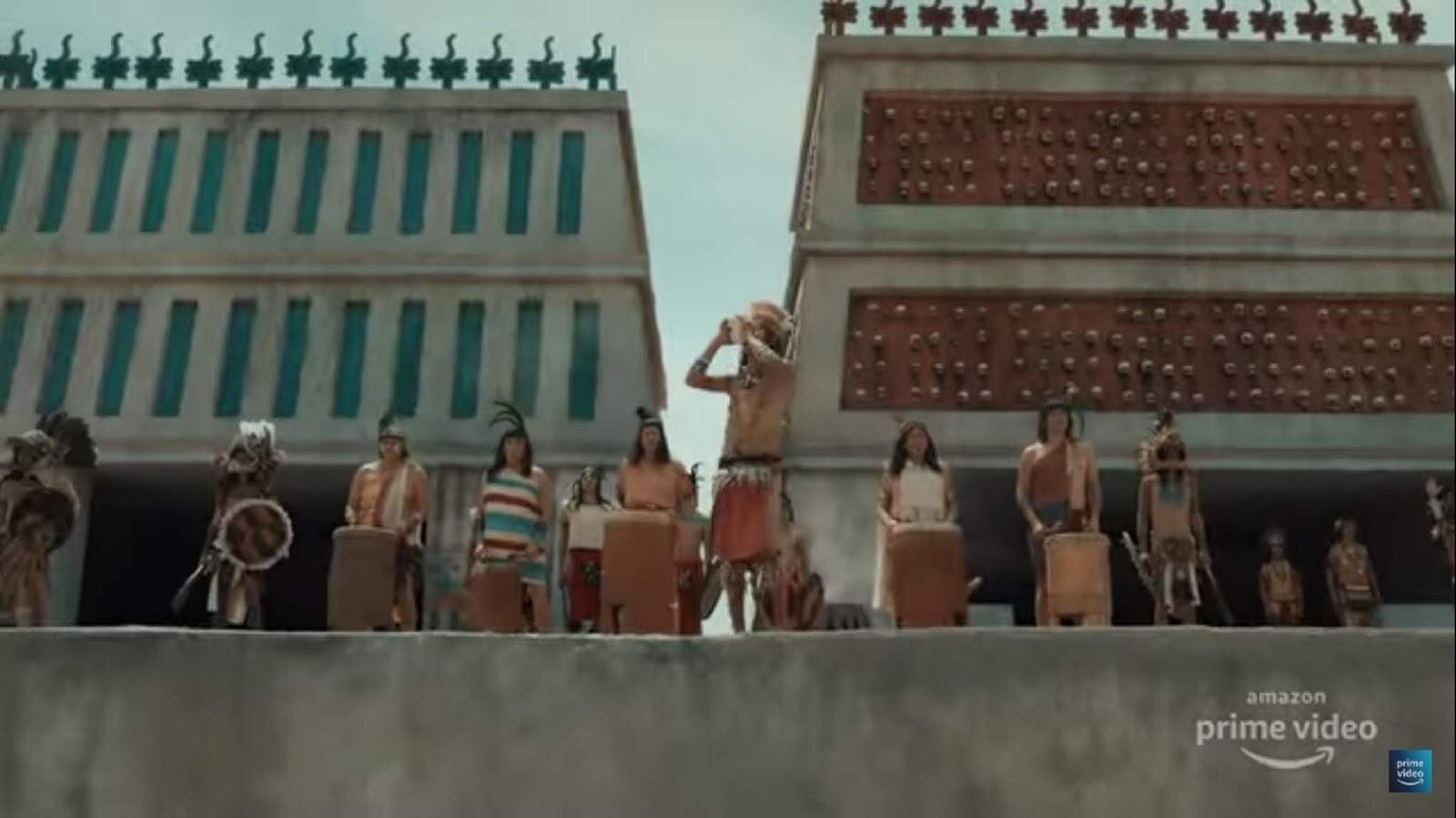
During final grading, Montaño employed the original R3D 8K files while monitoring in 4K. “Julián and Beto had very clear ideas for the look of the show,” she observes. “The look has a very strong personality. It is dramatic and moody, yet elegant. Generally, it is contrasty and based on the two-strip Technicolor look, which allowed us to make the most of the green and red hues.”
Montaño notes that the objective was to focus less on the historical period and more on the moods and emotions of the story. “For us, the red hues symbolize war and bloodshed, as well as the rawness and wildness of the environment,” she explains. “As many scenes were set in forests, we tried to add personality to those places by playing with the green hues of the vegetation. Everything is immersed in a mystic feeling of discovery of the unknown.”
Sound work also began early. Hernandez met with de Tavira and his production team before shooting began to discuss the challenges of recording dialogue and ambient sound in modern day rural Mexico. “Much of the story takes place near the shore in Veracruz, deep in the jungle in Chiapas or near present day Mexico City,” he notes. “Whenever you place a microphone in those environments, the 21st century arrives. We knew it was going to be challenging to strip away everything that wasn’t natural or didn’t belong to the historical period. We were fortunate to work with an excellent production mixer, Leandro Luna, but we also spent a lot of time in the cutting rooms removing every trace of contemporary sound.”
As he began to gather sound design elements, Hernandez strove for accuracy in terms of the series’ time and setting. He met with local botanists and ornithologists familiar with the flora and fauna of Mexico in the 16th century, and then began assembling a library of sounds that represented the period correctly. “There are a few birds in Tenochtitlan today that were living there when Cortes arrived,” he explains. “Luckily, we were able to find good recordings of them. For other ancient birds, we identified modern equivalents and made field recordings, careful to avoid contemporary sounds like airplanes and car traffic.”
Hernandez was just as resourceful in creating sound effects for period artifacts. He and his crew were able to locate existing recordings for certain muskets, swords, bow and arrows and spears used by Spaniards and Native Americans, as well as things like wagons, ships, horses and saddles. But many other sounds had to be produced in Foley sessions. In some cases, the sound crew borrowed period props from art and history museums to achieve authentic sound. Similarly, Hernandez employed actors who spoke the Native American languages Nahuatl and Tzotzil in loop sessions for crowd scenes involving Aztec characters.
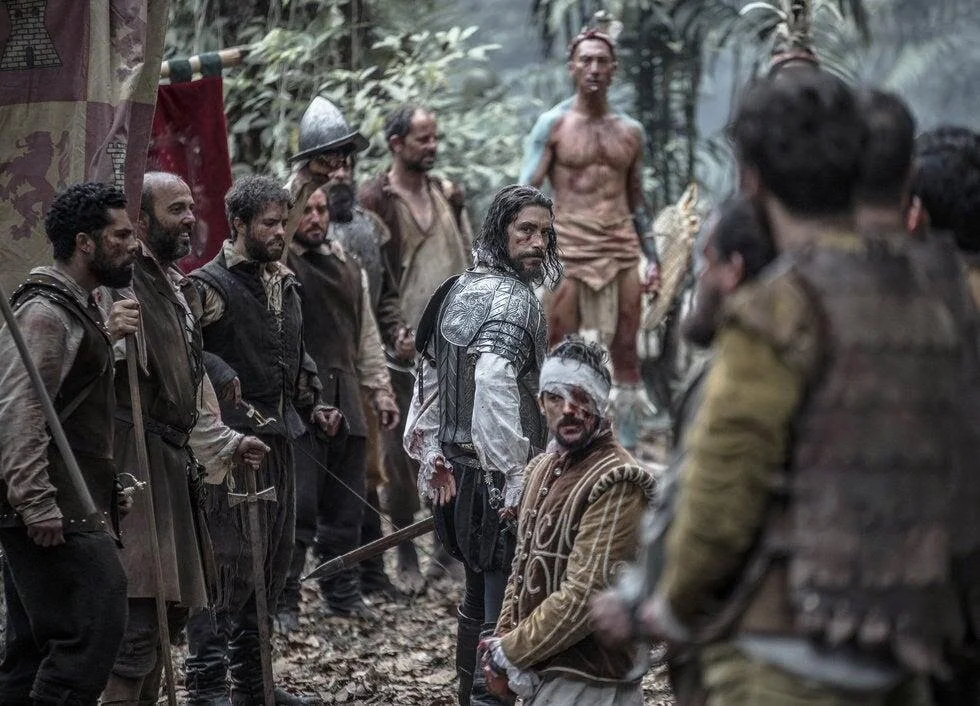
During mix sessions, Hernandez took a restrained approach in blending sound effects with dialogue and music. Even in intense battle scenes, he limited effects to those essential to advancing the story. “The question I always ask my crew is ‘What are we hearing?” he explains. “What are we hearing at this moment? When does the music come in? Where is the camera panning? Not everything matters. If everything is important, then nothing is important. You have to be meticulous in choosing sounds that serve the story.”
Hernandez points to a scene where Cortes, dressed in full body army, is standing in a jungle addressing his troops. “The armor has weight and makes sounds, but they mustn’t interfere with the dialogue,” he insists. “It has to have the right balance. You some metal sounds as he moves and adjusts himself, but it never overpowers his words. Rather, they’re part of the environment, the atmosphere.”
Despite the historical setting and the complexity of some of the action scenes, sound work for each episode was completed in less than two weeks. “We had six full days of editing, and six days of mixing,” Hernandez says. “They were long days, but we didn’t want to make any compromises. That wouldn’t be fair to anyone.”
About Cinematic Media
Cinematic Media is the only full-service post-production facility in Mexico focused exclusively on episodic television and motion pictures. We combine world-class talent, innovative workflows and superior engineering to help content creators fulfill their visions and meet global delivery standards.
Located in Mexico City within newly-built Estudios GGM, Cinematic Media is an integral part of one of the largest and most sophisticated production centers in Latin America. We support projects through their entire lifecycle, delivering experienced guidance and media management during pre-production and production, and expert technical and creative service through each phase of post.
We offer customized solutions. We tailor workflows and service packages to the budget, deadline and creative dimensions of the individual project. Our color specialists, editors, colorists, visual effects artists, QC technicians and producers bring deep, international experience and a passion to excel. We also feature high-speed connectivity through Sohonet allowing clients to connect, collaborate and share data effortlessly with studios, production partners and other stakeholders around the globe.